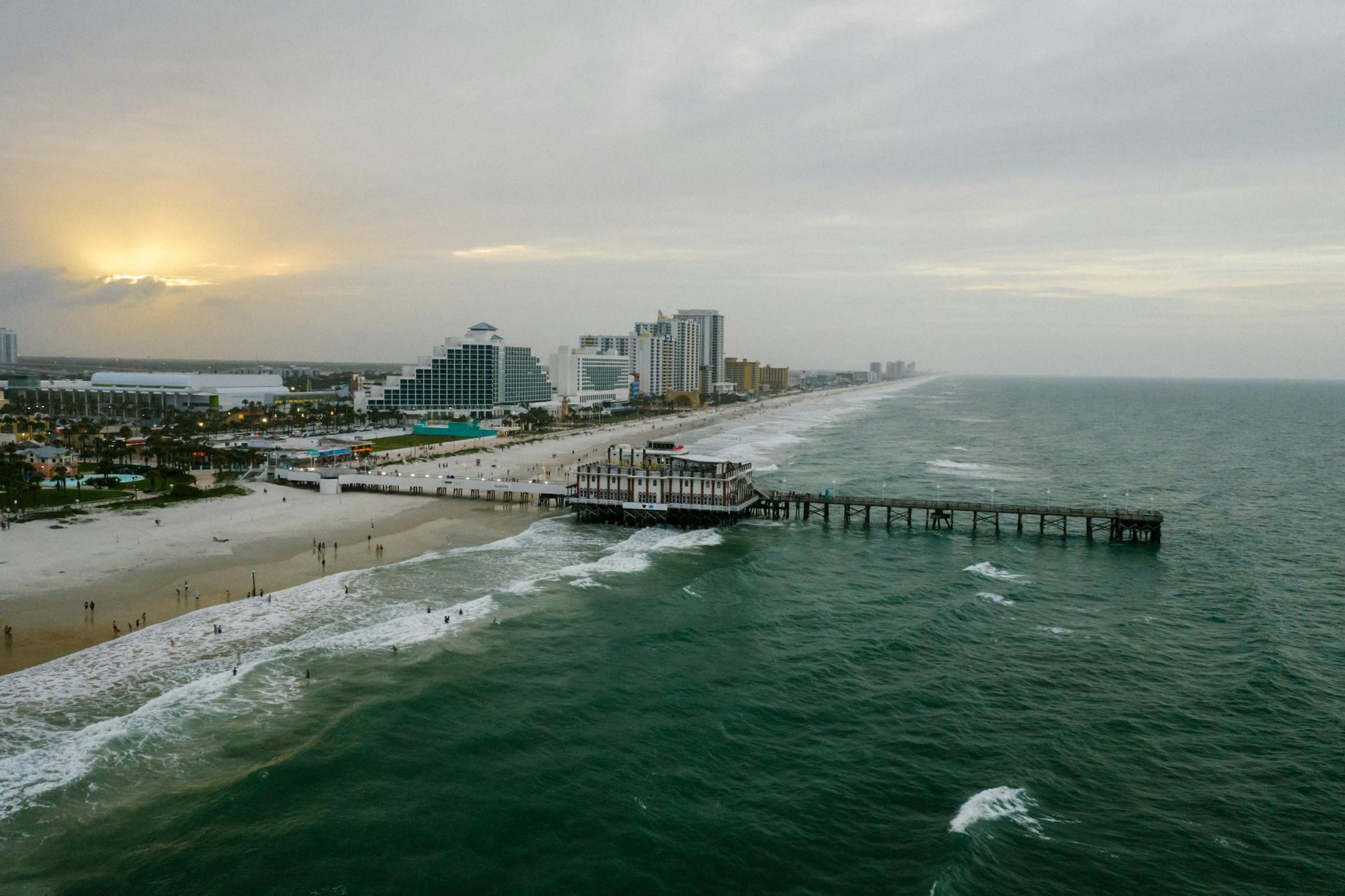
Volusia
Volusia County is one of Florida's most geographically distinct counties — 1,432 square miles of Atlantic coastline, St. Johns River basin, and fast-growing I-4 commuter suburbs that straddle the line between the Orlando MSA and a standalone Atlantic coast metro. The county's ~612,000 residents cluster into three distinct zones: the beachside Atlantic coast corridor (Daytona Beach, Ormond Beach, New Smyrna Beach, Edgewater), the historic west Volusia county-seat market (DeLand, Orange City, DeBary), and the fast-growing suburban interior (Deltona, Port Orange). Median home prices county-wide are approximately $337–343K — making Volusia one of the most affordable Atlantic-coast counties in Florida with a genuine beachside lifestyle attached.
- Median price
- $340,000
- Tax rate
- 1%
- Days on market
- 77
- Cities covered
- 2
Fit check
Should you consider Volusia?
Volusia County sits at a geographic and cultural crossroads that makes it unlike any other Central Florida county. Its eastern edge is defined by 47 miles of Atlantic coastline — beaches famous enough for world championship auto racing, surfing competitions, and motorcycle rallies that draw hundreds of thousands annually. Its western edge touches the St. Johns River and the rapidly urbanizing I-4 corridor that connects DeBary and Deltona to the Greater Orlando metro. Between these poles lies DeLand, the historic county seat and home to Stetson University, whose reviving downtown is one of the most pleasant surprises in Central Florida real estate discovery. Understanding Volusia requires understanding its internal geography — because buying in Daytona Beach Shores is an entirely different decision than buying in DeBary or Port Orange. The Atlantic coast corridor is Volusia's most recognizable geography. Daytona Beach — with Daytona International Speedway at its core — is the county's largest city and its most complex real estate market. The hard-packed sand of Daytona Beach (one of the only beaches in Florida where driving on the sand is permitted) draws 8+ million visitors annually. The Speedway complex alone hosts NASCAR's most prestigious events — the Daytona 500 in February, the Coke Zero Sugar 400 in August — plus Bike Week each March (500,000+ attendees) and Biketoberfest each October. That event density is both an economic engine and a proximity tradeoff that every Daytona Beach buyer must consciously evaluate. North of Daytona, Ormond Beach offers a quieter, more affluent residential character with historical significance as a Rockefeller winter retreat and one of Florida's early auto-racing sites. South of Daytona, Daytona Beach Shores and Ponce Inlet offer oceanfront condo inventory at price points that significantly undercut comparable Brevard or St. Johns County product. New Smyrna Beach — at Volusia's southern tip — operates in a different register altogether: it's consistently ranked among the top surf spots on the East Coast, has a genuine Flagler Avenue arts and dining district, and draws a buyer profile of artists, professionals, and second-home buyers who want Atlantic frontage without the Speedway adjacency. West Volusia is the county's emerging story. DeBary, at the SunRail northern terminus, has become a genuine commuter suburb for Orlando employment — the SunRail connection places downtown Orlando about 60–70 minutes by rail, and I-4 West puts it at 40–45 minutes by car in off-peak conditions. Deltona, the county's second-largest city with 110,000+ residents, is a dense suburban fabric of single-family homes that grew explosively in the 1970s–1990s as an affordable alternative to Orange County. Orange City, adjacent to DeLand, has a small but stabilizing downtown. DeLand itself is the county seat and a genuinely distinctive place — Stetson University's main campus anchors a Victorian-era downtown that has seen meaningful restaurant and boutique investment over the past decade. The Stetson community brings an educated, arts-engaged demographic that contrasts with both the Speedway tourism economy of the coast and the working-class suburban character of Deltona. For real estate buyers, Volusia's opportunity story is straightforward: Atlantic coast lifestyle — beach access, maritime character, warm-weather outdoor living — at price points that are meaningfully below Pinellas (St. Pete/Clearwater), Palm Beach, or even Brevard for comparable beach proximity. The county's effective property tax rate of 0.96% is below both the Florida median (1.10%) and the national median (1.02%), which compounds the value proposition. The risks that accompany that value — coastal flood exposure, wind insurance costs, event-weekend congestion, and school quality that varies sharply by submarket — are real and quantifiable, and Ben Laube can help buyers model them accurately before any offer.
Volusia County suits buyers who want Atlantic coast lifestyle — beach access, maritime character, warm-weather outdoor living — at price points well below comparable Pinellas, Brevard, or St. Johns County product. The county has four distinct lifestyle nodes: the motorsports-and-events coast of Daytona Beach and Ormond Beach; the surf-and-arts character of New Smyrna Beach; the college-town revival of DeLand (Stetson University); and the I-4 commuter suburbs of DeBary, Deltona, and Orange City for Orlando-employed buyers. The county's lower effective property tax rate (0.96%) and median price range ($337–343K) make it one of the strongest value propositions on Florida's Atlantic coast.
On the map
Volusia County, FL
Pan, zoom, and toggle satellite view to orient yourself before a visit or showing.
Map tiles © Google. For address-level boundary, school zone, or flood-zone questions, contact Ben directly.
Cost to own
What buyers should budget for
Volusia County ownership costs are shaped by three variables: which corridor you buy in (beachside Atlantic coast vs. west Volusia suburban vs. historic DeLand), flood and wind insurance costs for properties east of I-95, and the absence of CDD assessments (common in Orlando-metro counties but rare in Volusia). The effective property tax rate of 0.96% is below both Florida and national medians. Median entry-level single-family inventory starts around $250–275K in Deltona and west Volusia; beachside condos in Daytona Beach Shores start around $175–225K. New Smyrna Beach commands a premium over Daytona Beach of 15–25% for comparable beach proximity.
- Entry single-family
- $265,000
- Luxury threshold
- $700,000
- Property tax rate
- 1%
- Insurance note
- Wind and flood insurance are mandatory carrying costs for any property east of I-95 in Volusia County. Properties in FEMA flood zones AE or VE (oceanfront, inlet, and low-lying coastal areas) require separate NFIP or private flood coverage. Windborne-debris zones cover virtually all of east Volusia. Obtain a full insurance quote including wind mitigation inspection before writing any offer on a coastal Volusia property.
Request a flood zone determination certificate and elevation certificate for any beachside or riverfront property. Confirm school zone at vcsedu.org — do not rely on community marketing or neighborhood names for school assignment. For west Volusia I-4 commuter purchases, test the actual morning commute (7–8:30 a.m.) to your Orlando employment anchor before going under contract.
Market snapshot
How the county is moving
As of spring 2026, Volusia County's median home sale price is approximately $337,725–$343,000 depending on source and period — down roughly 1–2% year-over-year as the pandemic-era price run softens. Redfin (December 2025) reports a median sale price of $343K (-1.4% YoY) with homes selling in approximately 77 days, up slightly from 76 days. Zillow reports the typical home value at $337,725 (+2.2% YoY). Inventory is at approximately 5.2 months countywide as of early 2026 — well above the sub-2-month levels of 2021–2022 and approaching a buyer-friendly balance point. The Daytona Beach submarket has seen the largest correction (down ~8.2% from peak), creating the most favorable coastal buying conditions since the pre-pandemic era. New Smyrna Beach and Port Orange have held value better than Daytona Beach proper due to their higher-income buyer profiles. (Sources: Redfin Volusia County FL housing market; Zillow Volusia County FL home values; CoastalVolusiaHomes.com Feb 2026 market report; web search aggregation 2026-06-05.)
- Median sale price
- $340,000
- YoY price change
- -1.4%
- Days on market
- 77
- New construction
- 10%
As of 2025-12-01. Redfin Volusia County FL housing market (redfin.com/county/500/FL/Volusia-County/housing-market), Dec 2025; Zillow Volusia County FL home values (zillow.com/home-values/2063/volusia-county-fl/), retrieved 2026-06-05; CoastalVolusiaHomes.com market report Feb 2026; web search aggregation 2026-06-05
Where to look
Cities in Volusia
Start with the city fit, then narrow into neighborhoods, schools, and new-construction options.
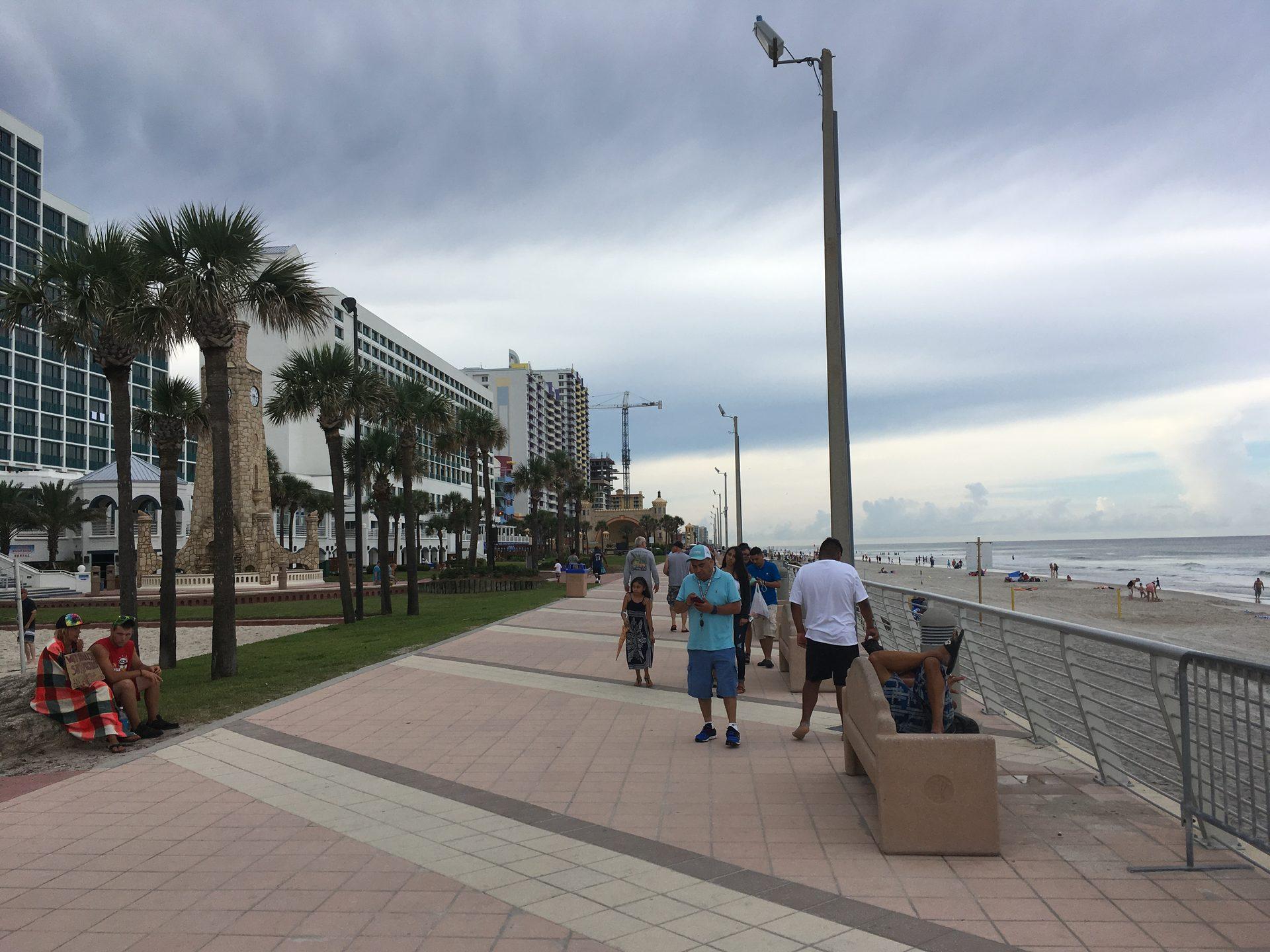
Daytona Beach
Median $279,000
Home of NASCAR, 23 miles of hard-packed Atlantic coastline, and Embry-Riddle Aeronautical University — Daytona Beach is Volusia County's economic engine and one of Central Florida's most affordable coastal markets.

Edgewater
Median $310,000
A quiet riverfront city on the Indian River Lagoon, where manatees surface at dawn and new construction is bringing young families to Volusia County's southern edge.
New construction
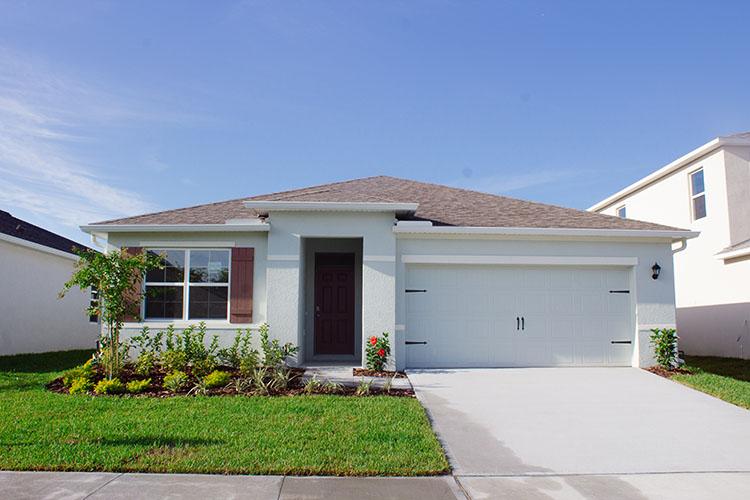
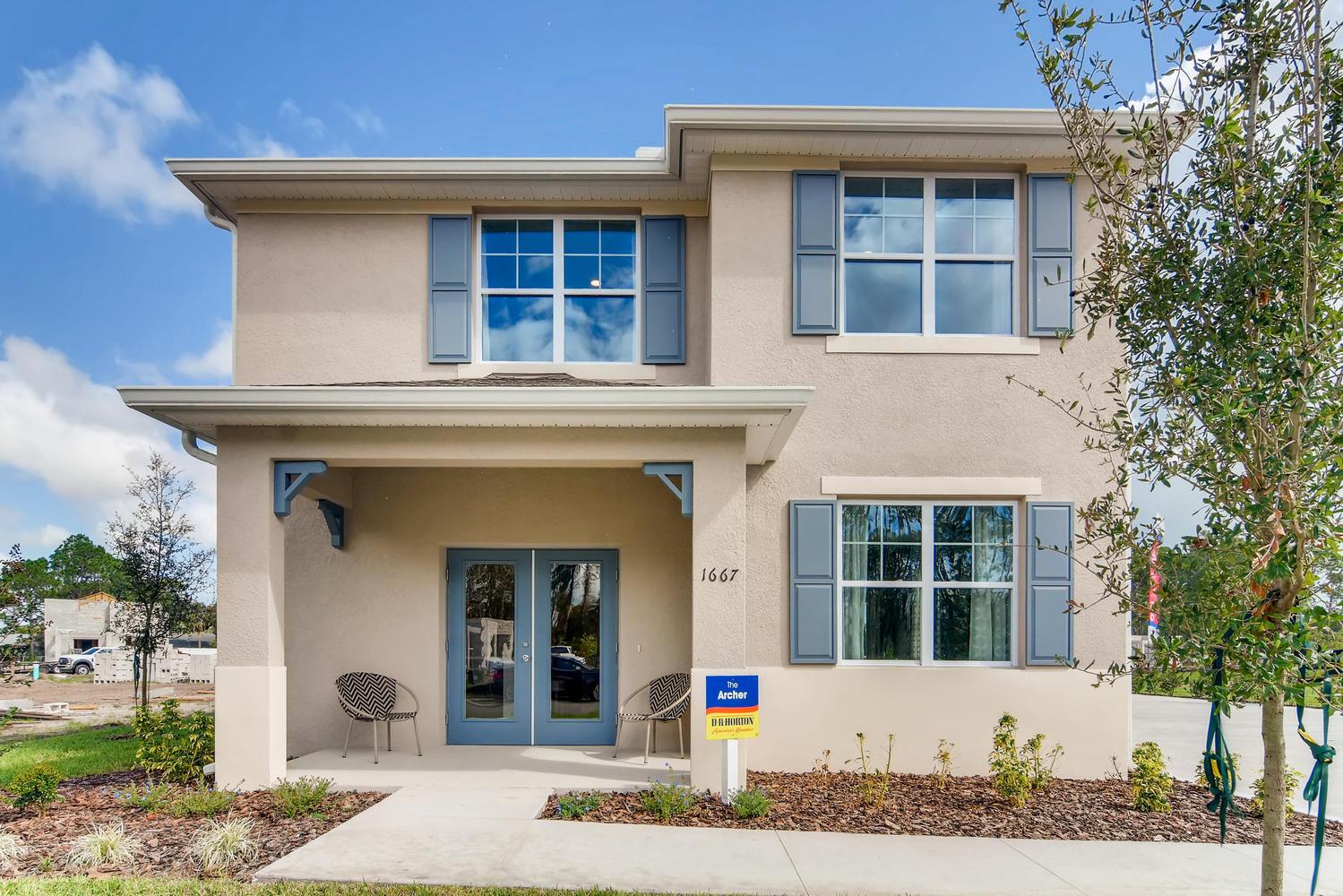
Builder communities in Volusia
Commute and lifestyle
How daily life works here
Volusia County commutes anchor on three major corridors: I-4 (DeBary/Deltona to Orlando — 40–55 min off-peak, 55–80 min peak), I-95 (north-south Atlantic coast corridor to Jacksonville or Brevard/Brevard), and US-1 (coastal surface road). SunRail provides commuter rail from DeBary to downtown Orlando, with service to Sand Lake Road and the MCO area. Daytona Beach International Airport (DAB) provides direct regional air service; Orlando International (MCO) and Sanford International (SFB) are the secondary hubs for national and international travel.
- I-4 West to Orlando employment core (downtown Orlando, Lake Mary/Heathrow, UCF) — 40–55 min from DeBary/Deltona off-peak
- SunRail DeBary Station (northern terminus) — commuter rail to downtown Orlando, Sand Lake Road, and Kissimmee; ~70 min to downtown Orlando
- I-95 North/South Atlantic coast corridor — Jacksonville 1.5 hours north; Brevard County 45 min south from Edgewater
- Halifax Health Medical Center and AdventHealth Daytona Beach — major healthcare employment anchors in east Volusia
- Embry-Riddle Aeronautical University (Daytona Beach campus) — aerospace/aviation employment anchor
- Daytona Beach International Airport (DAB) — regional air service; Orlando International Airport (MCO) ~50 min via I-4
- Brown & Brown Insurance (Daytona Beach) — corporate HQ for major professional employer
Watch before buying
Local gotchas
The most consequential buyer risks in Volusia County are underestimating flood and wind insurance costs for coastal properties, buying within noise/traffic range of Daytona International Speedway without attending a major event first, relying on the district A-rating as a proxy for individual school quality without parcel-level verification, and underestimating I-4 peak-hour commute times from west Volusia to Orlando.
- Coastal flood and hurricane storm surge exposure is significant for properties east of I-95 — Daytona Beach, Ormond Beach, Ponce Inlet, New Smyrna Beach, and Edgewater all have areas in FEMA flood zones AE and VE. Wind insurance and NFIP flood coverage are effectively mandatory for beachside and oceanfront purchases.
- Speedway event noise during Daytona 500 Speedweeks (February), Bike Week (March), Biketoberfest (October), and Coke Zero Sugar 400 (August) can significantly impact quality of life within 3–5 miles of the Speedway — research event calendar and proximity before purchasing in Daytona Beach Shores, Holly Hill, or South Daytona.
- School performance varies sharply by east-vs-west geography and by specific school — east Volusia urban schools (Daytona Beach zoned) have historically underperformed county and state averages despite the district's 2025 A-rating improvement. Verify assigned schools at the parcel level via vcsedu.org before treating school reputation as a blanket buying factor.
- I-4 congestion between DeBary/Deltona and Orlando worsens significantly during peak hours — test the actual commute at 7:30 a.m. before committing to a home in west Volusia if an Orlando-area job is involved.
Official pages
County resources
- County government
Official county website
- Property appraiser
Parcel records, assessed value, and exemptions
- Tax collector
Tax bills, registrations, and payment portals
- Building department
Permits, inspections, and building resources
- Permit search
Permit lookup before buying or selling
- Flood map
Flood-zone and insurance-risk research
- Volusia County Council
Council member roster, district map, meeting schedules, and board contacts for all 7 council districts.
- Volusia County Property Appraiser (VCPA)
Property search, homestead exemption, tax estimator, millage tables, and assessed value lookup for Volusia County parcels.
Leadership
County leadership
- Jeff Brower
Chair, Volusia County Council / At-Large (Chair)
- Jake Johansson
Vice Chair, Volusia County Council / At-Large
- Don Dempsey
County Council Member / District 1
- Matt Reinhart
County Council Member / District 2
- Danny Robins
County Council Member / District 3
- Troy Kent
County Council Member / District 4
- David Santiago
County Council Member / District 5
Events
Upcoming county events
- Volusia County Council Regular Meeting
Jun 18, 2026 / Thomas C. Kelly Administration Center, 123 W. Indiana Ave, DeLand, FL 32720
Volusia County Council calendar — volusia.org; meetings held twice monthly
- Coke Zero Sugar 400 Weekend — Daytona International Speedway
Aug 22, 2026 / Daytona International Speedway, 1801 W. International Speedway Blvd, Daytona Beach, FL 32114
Daytona International Speedway 2026 race calendar — NASCAR Cup Series late-summer Daytona race weekend
- Biketoberfest — Daytona Beach
Oct 15, 2026 / Daytona Beach, FL (Main Street and Speedway area)
Biketoberfest annual Daytona Beach motorcycle rally — typically third weekend of October; 100,000+ attendees
FAQ
County questions
What cities are in Volusia County, FL?
Volusia County's major communities include Daytona Beach (largest city), DeLand (county seat since 1887), Port Orange, Ormond Beach, New Smyrna Beach, Edgewater, Deltona (second-largest city, 110,000+ residents), DeBary, Orange City, South Daytona, Holly Hill, Lake Helen, Pierson, and Ponce Inlet. The county's incorporated municipalities span from coastal Atlantic communities (Daytona Beach Shores, Ponce Inlet, New Smyrna Beach) to historic inland towns (DeLand, Orange City) to fast-growing I-4 corridor suburbs (DeBary, Deltona). DeLand is the county seat — a common source of confusion since Daytona Beach is much larger and better-known.
Is Daytona Beach a good place to live?
Daytona Beach is a good fit for buyers who want Atlantic beachfront proximity at a price point significantly below comparable coastal markets, proximity to Embry-Riddle Aeronautical University or the regional healthcare cluster (Halifax Health, AdventHealth), or the motorsports and event culture anchored by Daytona International Speedway. The realistic tradeoffs: event-weekend congestion and noise during Speedweeks, Bike Week, and Biketoberfest; a median home price that reflects a market in correction (down ~8.2% from peak as of early 2026); school quality that varies sharply by neighborhood; and flood and wind insurance costs for any property east of I-95. Daytona Beach Shores and Ormond Beach are frequently better choices for buyers seeking Daytona Beach proximity without the urban density and event-traffic impacts of the city core.
How are Volusia County schools rated?
Volusia County Schools earned an A-rating from the Florida Department of Education for the 2024–2025 school year — the district's first A-rating in 16 years and a meaningful improvement. The district's 95.6% graduation rate for the Class of 2025 ranks 9th of 67 Florida school districts and is 3.4 percentage points above the state average. That said, performance varies considerably by geography: Port Orange (Spruce Creek High School zone), Ormond Beach, and west Volusia schools generally outperform urban Daytona Beach zoned schools. Always verify assigned schools via vcsedu.org before treating school quality as a factor in any purchase decision.
What is Volusia County's property tax rate?
Volusia County's median effective property tax rate is approximately 0.96% of assessed value as of 2025, yielding a median annual tax bill of approximately $2,680 — below both the Florida median (1.10%) and the national median (1.02%). The county-wide composite millage is approximately 15.994 mills for unincorporated properties; incorporated municipalities carry additional municipal millages. Florida's homestead exemption reduces assessed value by up to $50,000, and the Save Our Homes cap limits annual increases to 3% for homesteaded properties. Flood and wind insurance premiums are a separate and often significant carrying cost for east Volusia coastal properties. (Sources: ownwell.com/trends/florida/volusia-county; vcpa.vcgov.org; retrieved 2026-06-05.)
How does Volusia County compare to Brevard County for Atlantic coast buyers?
Volusia and Brevard are the two Central Florida Atlantic coast counties most compared by beach buyers. Volusia (Daytona Beach, New Smyrna Beach, Ormond Beach) is north of the Space Coast; Brevard (Cocoa Beach, Melbourne) is south. Key differences: Volusia has more event-driven tourism traffic (Speedway, Bike Week) creating both economic vitality and proximity tradeoffs; Brevard has the Kennedy Space Center and a technology employment cluster (SpaceX, Boeing, L3Harris) driving higher household incomes in the Melbourne corridor. Median prices are comparable — Volusia's $337–343K range. Volusia's effective tax rate (0.96%) is slightly below Brevard's (~1.0%). For buyers focused on surfing culture and arts-district character: New Smyrna Beach is generally preferred over Cocoa Beach. For buyers tied to aerospace or defense employment: Brevard's Space Coast corridor wins.
What is it like to live near Daytona International Speedway?
Living within 3–5 miles of Daytona International Speedway means exposure to approximately 6–8 major event weekends per year — the Daytona 500 and Speedweeks (February), Rolex 24 at Daytona (January), Bike Week (March, 500,000+ attendees), Coke Zero Sugar 400 (August), and Biketoberfest (October). During major events, surrounding neighborhoods experience significantly elevated traffic, noise, and street activity. Many long-term Daytona Beach residents regard the events as a feature rather than a bug — the local economy depends substantially on event-weekend spending. Buyers should attend at least one major event in the specific neighborhood they are considering before committing to a purchase.
Thinking about a home in Volusia?
I work across all of Volusia. Send your budget, commute, school, or lifestyle priorities and I'll help you narrow the map.