— Community Guide
St. Pete Beach
St. Pete Beach, FL
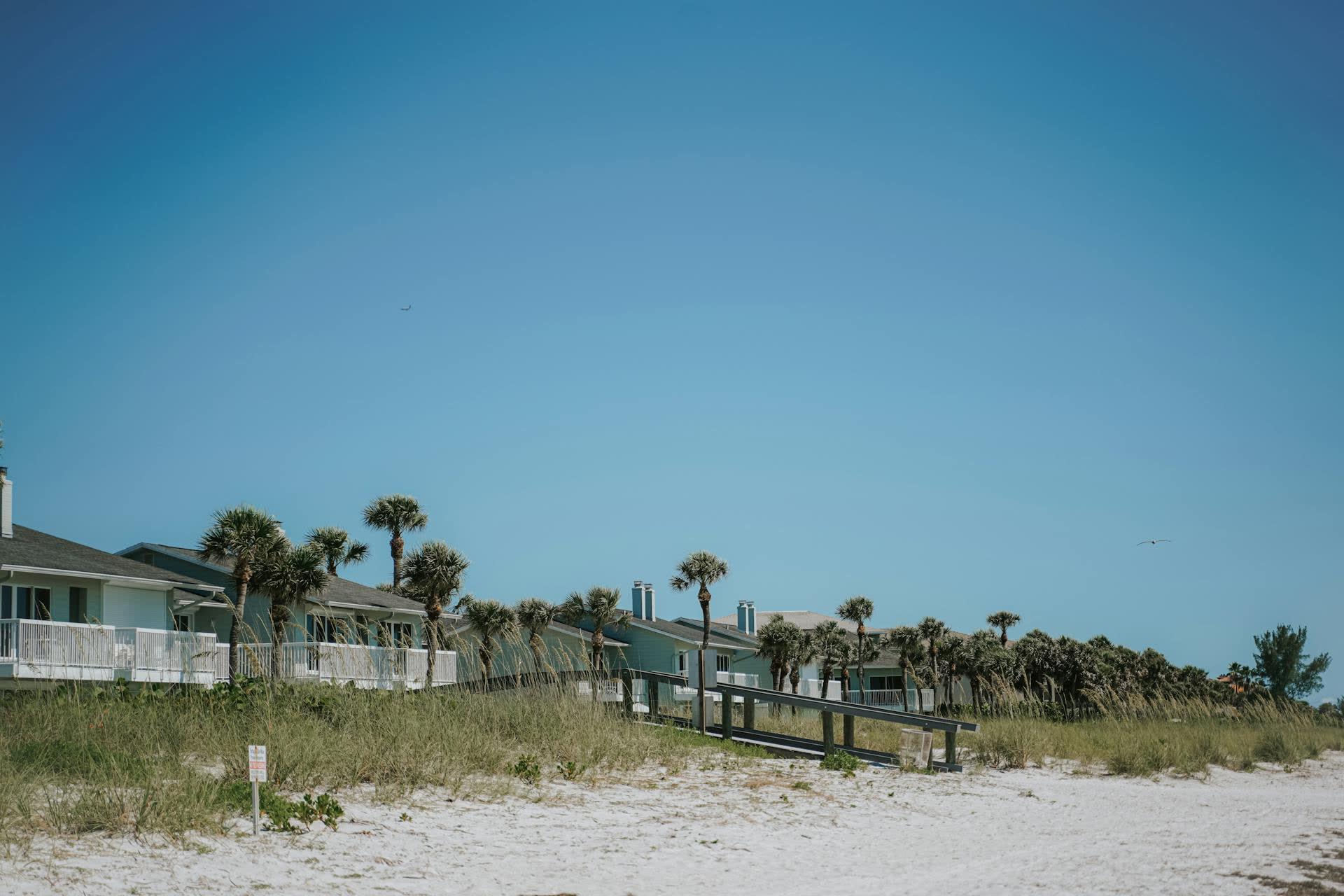
“St. Pete Beach is a Gulf-front barrier island city in Pinellas County — home to the Don CeSar, Corey Avenue, and seven miles of white sand beach shared between beach condos, midcentury single-family homes, and one of the best-known resort corridors on Florida's Gulf Coast.”
Gulf-front · barrier island · Don CeSar · Corey Avenue · beach condos + homes
What locals love
- Seven miles of white-sand Gulf beach accessible to residents
- The Don CeSar — the 1928 "Pink Palace" resort hotel on the National Register of Historic Places
- Corey Avenue — walkable main street with independent shops, restaurants, and a Sunday outdoor market
- Boca Ciega Bay and Intracoastal access on the east side for boaters
- Pass-a-Grille historic district at the south end (village-scale, no high-rises)
A brief history
Pass-a-Grille, the southernmost village, was incorporated in 1911 and is one of the oldest beach communities on the Gulf Coast. The Don CeSar Hotel opened January 16, 1928, built by developer Thomas Rowe and designed by Henry H. Dupont — it became the Jazz Age playground for figures including F. Scott Fitzgerald, Lou Gehrig, and Al Capone, and served as a military hospital during World War II. In 1957, five municipalities consolidated into the City of St. Petersburg Beach by a margin of 5 votes. Residents voted in 1994 to shorten the name to St. Pete Beach to reduce confusion with mainland St. Petersburg.
The housing mix
The housing mix divides between Gulf Boulevard's mid-rise beach condos (mostly 1960s-1980s builds, ranging from $350K for an interior-view unit to $1.5M+ for direct Gulf frontage) and the interior residential streets, which hold 1950s-1970s CBS ranch and stucco single-family homes, typically three bedrooms on standard lots. Prices on interior streets start around $600K and climb past $2M on bayfront and Gulf-front lots. Vina del Mar, a small private island off Boca Ciega Bay, sits at the premium end.
Who lives here
St. Pete Beach skews older than almost any Florida beach city — the 2020 census put the median age at 60.4 years. Retirees and snowbirds are the core demographic, drawn by the direct Gulf beach access, the Don CeSar resort halo, and the Corey Avenue walkability that other barrier islands lack. Second-home buyers from the Midwest and Northeast are common; Corey Avenue has enough independent restaurants and shops to sustain a year-round local life between tourist seasons.
Landmarks & things to do
- The Don CeSar — 1928 Moorish Mediterranean resort hotel, National Historic Landmark, Gulf beach access
- Corey Avenue — main street with independent boutiques, bars, restaurants, and the Sunday outdoor market
- Upham Beach Park — public Gulf beach with volleyball and picnic facilities at the north end
- Pass-a-Grille Beach and Historic 8th Avenue — village-scale shopping and dining at the south end
- Sunset Beach — a local-favorite stretch near the Blind Pass bridge, quieter than Gulf Boulevard
- Gulf Beaches Historical Museum — located in Pass-a-Grille's first church, self-guided historic walking tour
- Merry Pier — historic pier and bait shop dating to 1902 at the Pass-a-Grille waterfront
- Boca Ciega Bay kayaking and paddleboarding — launch from public ramps on the intracoastal side
Schools in the area
Detailed school zone + rating pages are rolling out progressively. Ask Ben about school-zoned home searches in St. Pete Beach — he'll pull the exact attendance map and closed-sale data for each feeder pattern.
Frequently asked about St. Pete Beach
What is the Don CeSar and why does everyone call it the Pink Palace?
The Don CeSar is a Moorish Mediterranean-style resort hotel that opened on January 16, 1928, built by developer Thomas Rowe. Its distinctive pink exterior — the result of Rowe's insistence on the color against the architect's preference — quickly earned it the nickname "The Pink Palace." During the Jazz Age it hosted F. Scott Fitzgerald, Lou Gehrig, Al Capone, and Franklin D. Roosevelt. The U.S. Army requisitioned it as a hospital in 1942. It was added to the National Register of Historic Places in 1975 and remains the visual anchor of St. Pete Beach's Gulf Boulevard.
Do homes in St. Pete Beach require flood insurance?
Yes. All of St. Pete Beach is in a FEMA flood zone, and financed properties in AE or VE flood zones are required by lenders to carry flood insurance. Gulf-front and bay-front properties typically fall in higher-risk zones with premiums that can range from $2,000 to $8,000 or more per year. Post-hurricanes Helene and Milton in late 2024, private flood insurance availability has tightened significantly and some carriers have pulled out of Pinellas County. Get a full insurance quote — including wind and flood — before making an offer on any St. Pete Beach property.
What schools serve St. Pete Beach?
Students attend Gulf Beaches Elementary Magnet School (K-5, a Center for Innovation and Digital Learning reopened as a magnet in 2014), Azalea Middle School, and Boca Ciega High School — all part of Pinellas County Schools. Gulf Beaches Elementary is located at 8600 Boca Ciega Drive in St. Pete Beach. Confirm your specific property's school assignment at pcsb.org — zone boundaries occasionally shift and the city's size means a few edge addresses may have different assignments.
What is the St. Pete Beach real estate market like in 2026?
St. Pete Beach has shifted to a buyer's market in 2026. The March 2026 median sale price was around $599K — down roughly 8.5% year-over-year — and average days on market has risen to 83 days, up from 45 a year prior. Active inventory is elevated at roughly 260 listings. The primary drivers are post-hurricane insurance uncertainty (Helene and Milton hit in 2024) and rising carrying costs for beach properties. Buyers have more negotiating room than at any point since 2020; sellers are accepting concessions more readily.
How does St. Pete Beach compare to Treasure Island or Clearwater Beach?
Clearwater Beach is the highest-traffic tourist destination of the three — busy, heavily commercial, and generally priced higher for anything with a Gulf view. Treasure Island is quieter than Clearwater, more residential, and sits directly north of St. Pete Beach on the same barrier island chain. St. Pete Beach sits in the middle in terms of activity: more town-center feel than Treasure Island (Corey Avenue), less resort-strip commercialization than Clearwater Beach. Pass-a-Grille at St. Pete Beach's south end is the quietest and most historic of all three options.
Nearby
Other communities you might like
Allendale Terrace
St. Petersburg
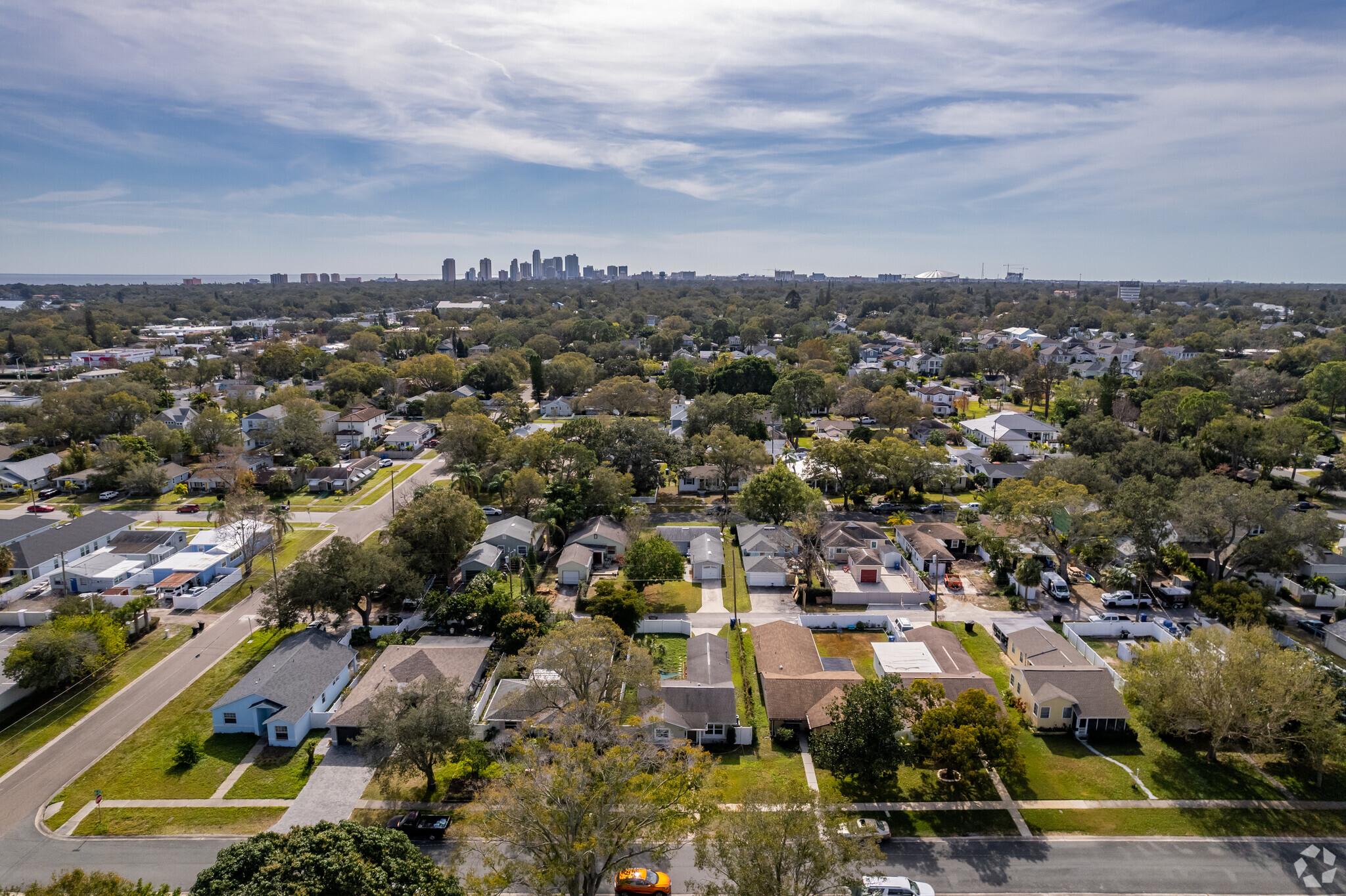
Cobblestone brick streets, estate-scale lots, and 1920s Mediterranean and Tudor homes on high ground north of Crescent Lake.

Coquina Key
St. Petersburg
A man-made island 3 miles south of downtown St. Pete — canals, private boat docks, and Tampa Bay access at prices that still make waterfront living attainable.
Crescent Lake
St. Petersburg
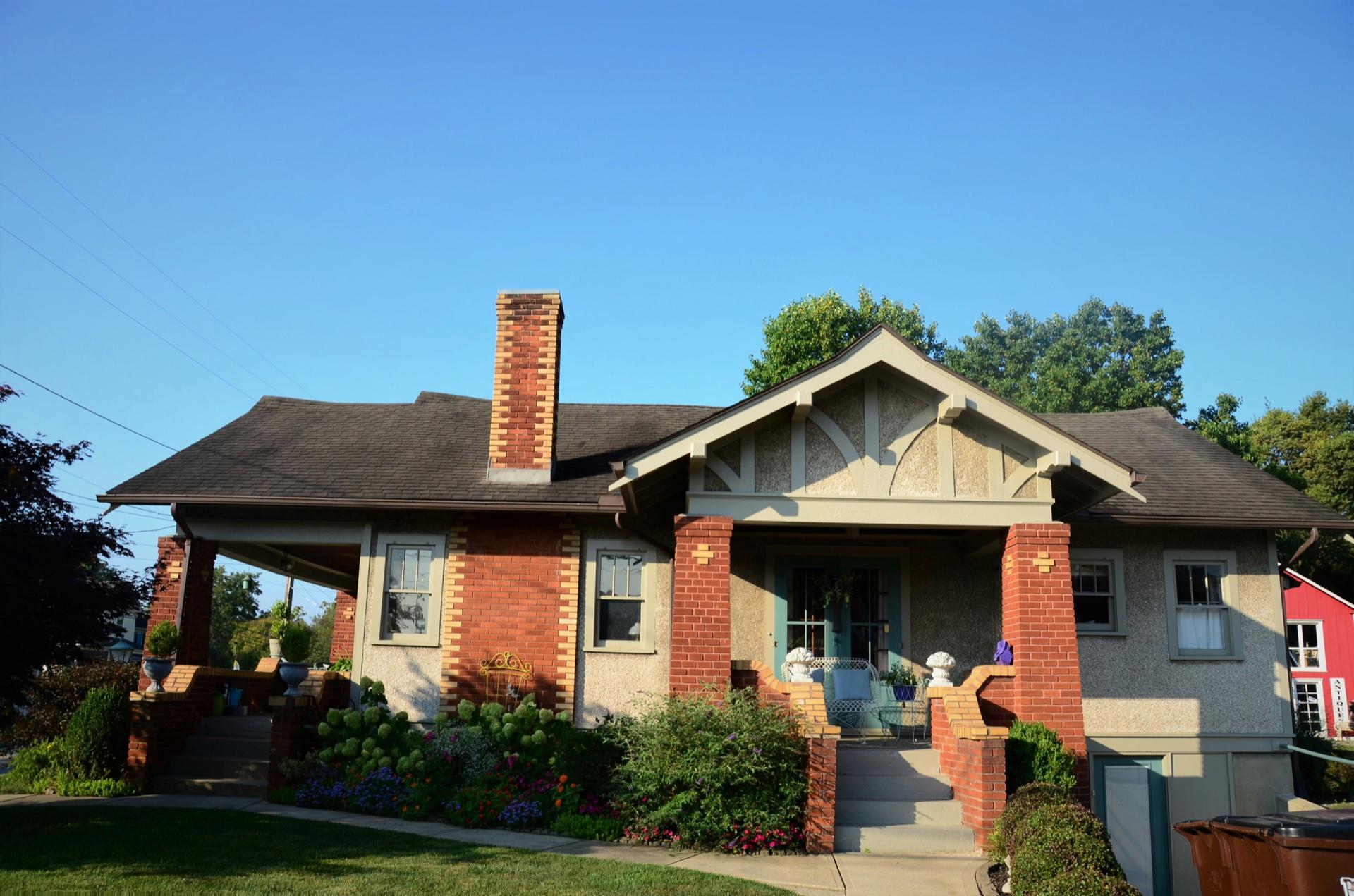
A historic neighborhood ringing a 54-acre park lake less than a mile from downtown -- where Babe Ruth took spring training, and Craftsman porches still face tree-lined streets out of the flood zone.
Where St. Pete Beach is
St. Pete Beach, FL
Same city
More neighborhoods in St. Pete Beach

Thinking about a home in St. Pete Beach?
Tell me what you're looking for and I'll send a tailored list with context on each one — schools, flood zones, market timing, the stuff that matters.